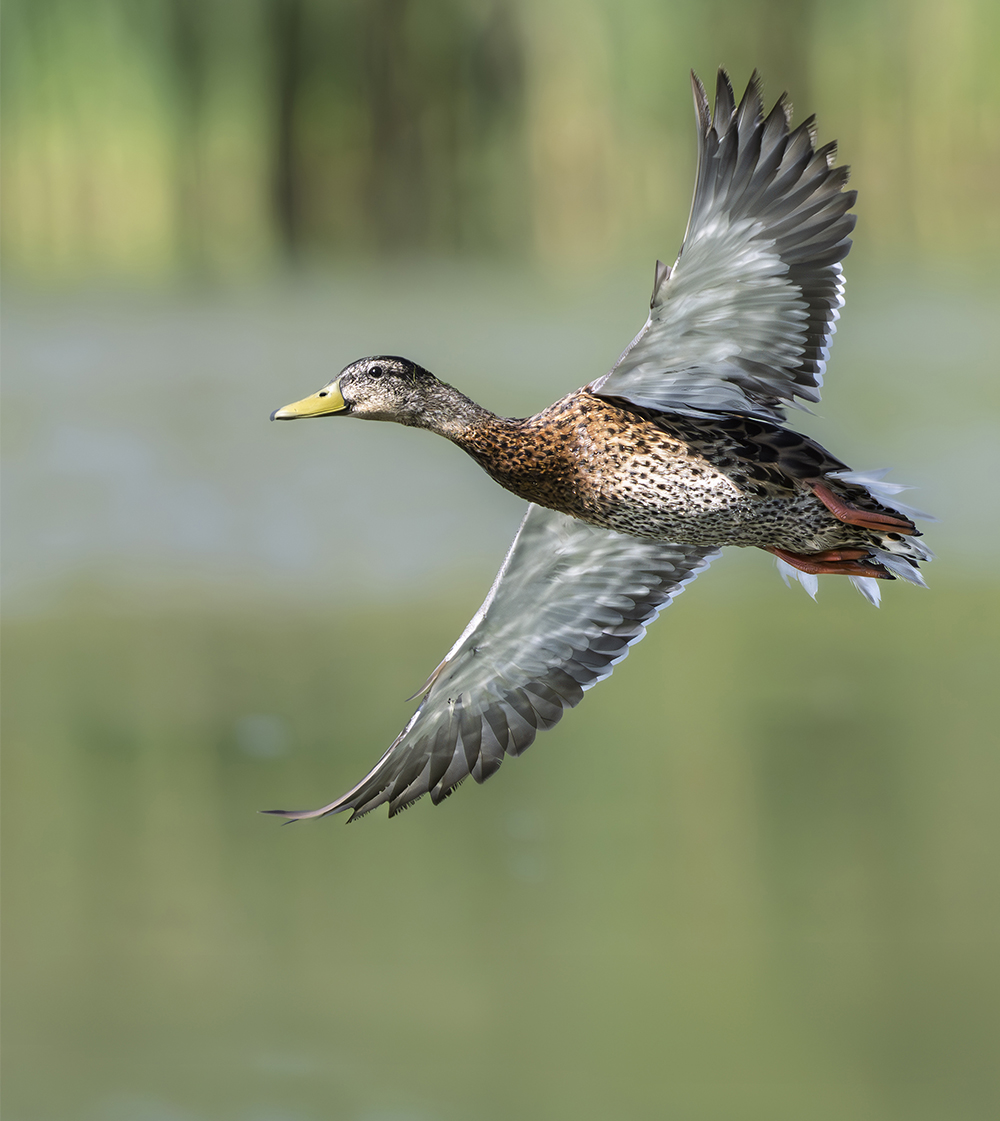
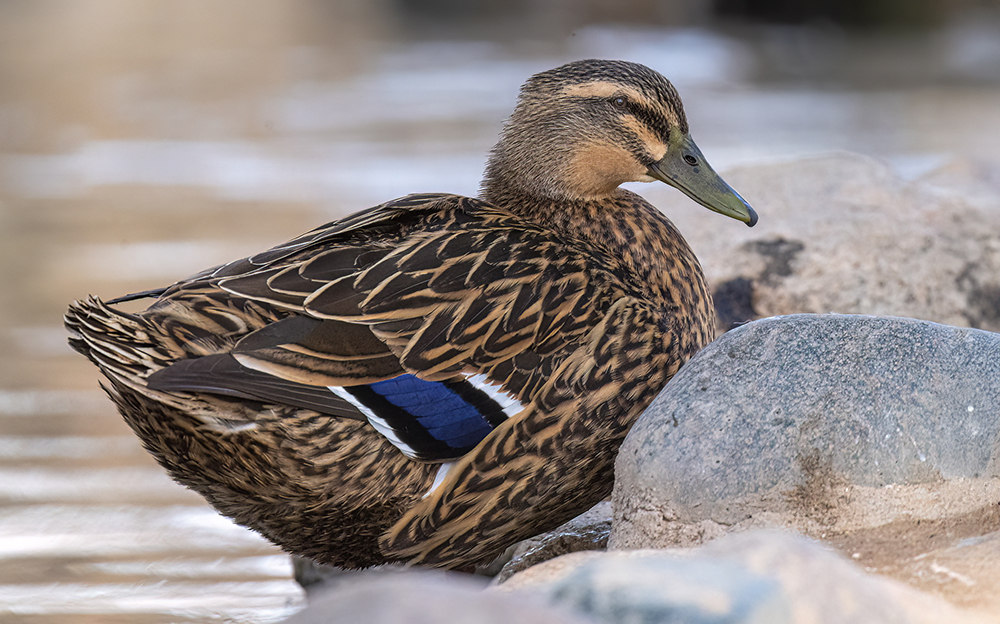
Mallards are Arizona’s most familiar dabbling duck, occurring statewide wherever open water is present. In winter—roughly October through March—the species is especially abundant, with migrants from northern breeding grounds joining resident birds to form large flocks on reservoirs, irrigation canals, and riparian marshes. Breeding pairs nest from late February through May, selecting sites near emergent vegetation along ponds, lakes, and slow‐moving rivers; successful clutches average 8–12 eggs. Mallards forage by tipping forward in shallow water to graze on aquatic plants, seeds, and small invertebrates, but they will also graze on terrestrial grains and forage scraps in agricultural fields. Urban and suburban ponds often host year-round populations, including feral or released domestic Mallards that interbreed with wild stocks.