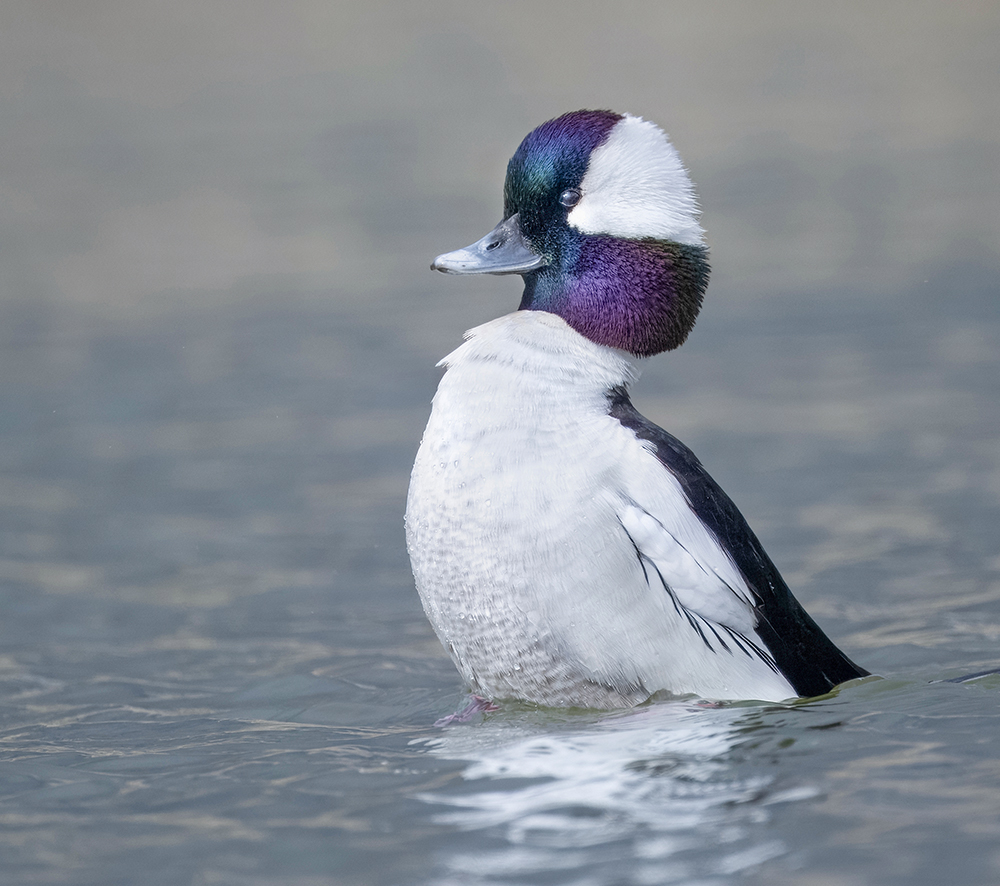
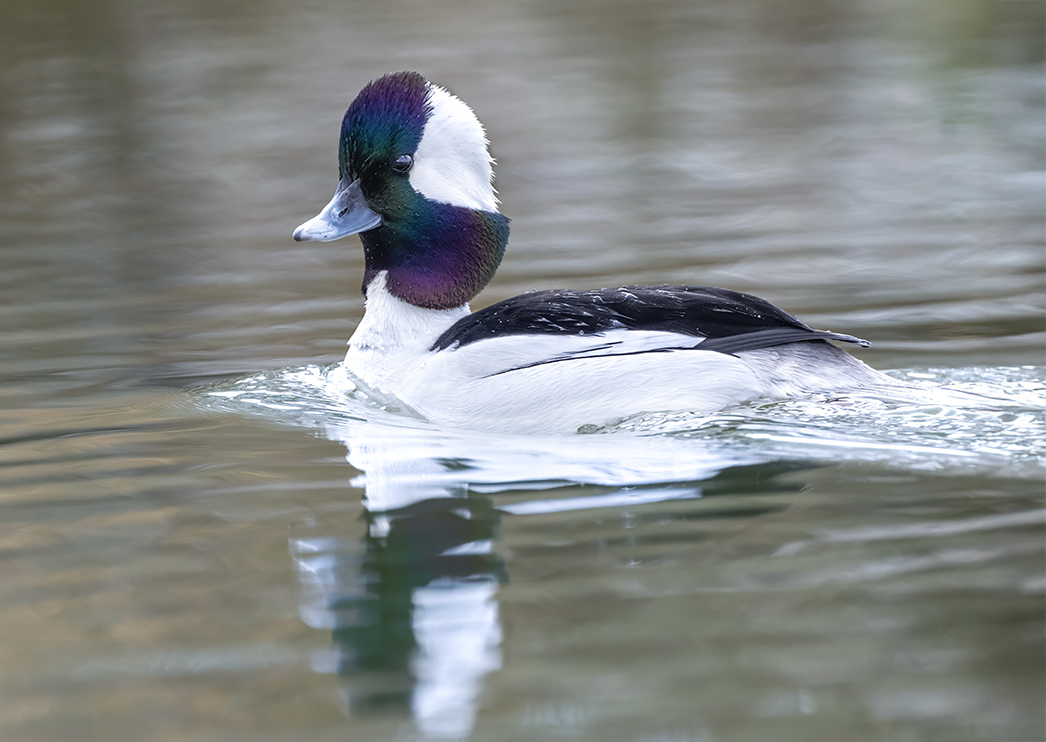
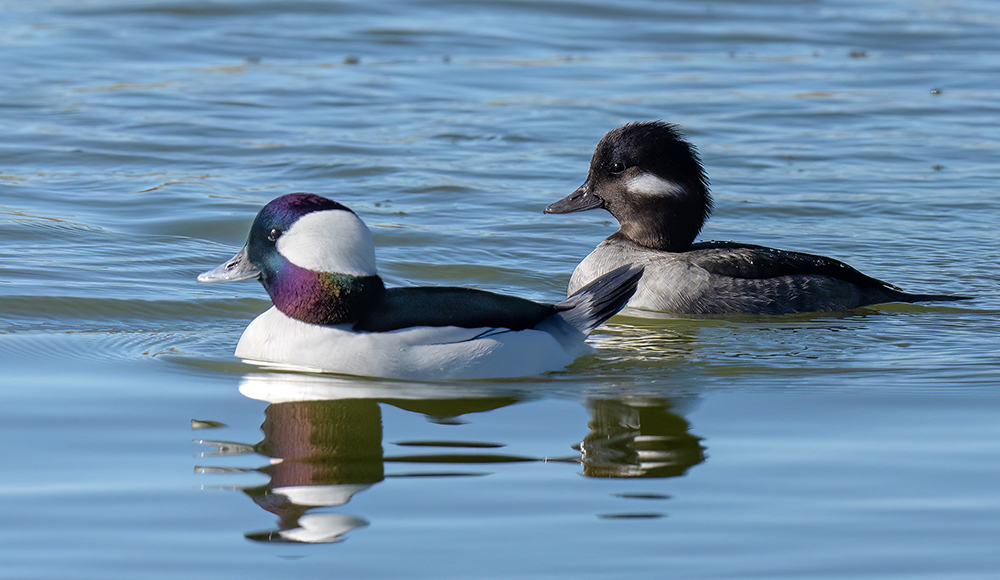
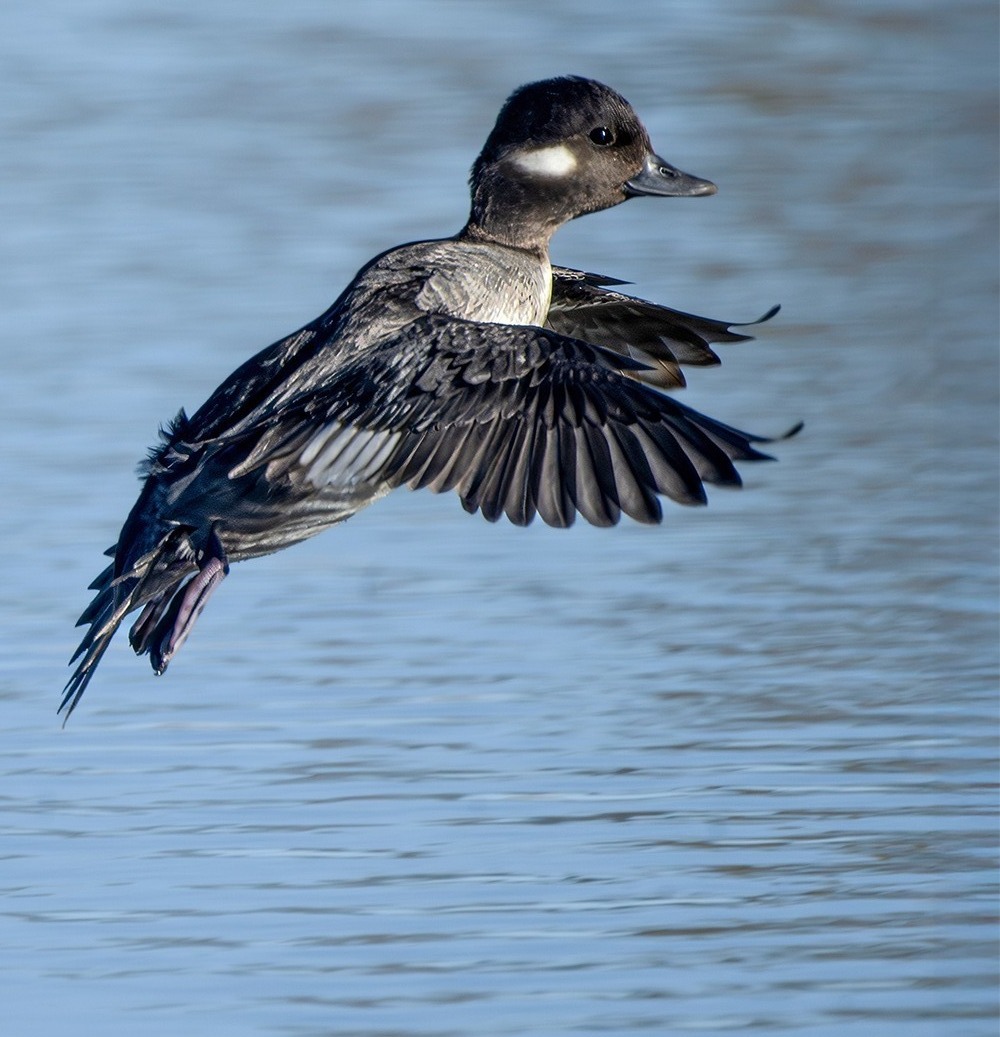
Buffleheads are tiny diving ducks—among the smallest in North America—measuring just 12.5–15 inches in length and weighing 270–380 g. Adult drakes are strikingly patterned in bold black-and-white, with iridescent green and purple hues on a rounded head and a large white cheek patch, while females and juveniles are more subdued gray-brown with a smaller white cheek spot.
They breed in tree‐cavity sites—often old Northern Flicker holes—in the boreal forests and aspen parklands of Alaska and Canada, then migrate south to winter across much of the contiguous United States, including Arizona. In Arizona, Buffleheads are regular winter visitors from roughly October through March, occurring statewide on reservoirs, lakes, ponds, rivers, and sheltered urban water bodies in small flocks or pairs.
During the winter months in Arizona, Buffleheads favor shallow, sheltered waters—coves, inlets, estuarine bays, and backwater areas of reservoirs—where they forage by diving. They typically spend 10–20 seconds underwater in pursuit of aquatic invertebrates (insects, crustaceans, mollusks), small fish, and occasional plant matter such as seeds of pondweeds and bulrushes.
Behaviorally, Buffleheads are highly active divers that may all plunge simultaneously in a small group, surfacing at intervals with quick, buoyant wingbeats. Courtship displays begin in late winter, featuring head‐bobbing, wing‐lifting, and short display flights, but all nesting takes place far north of Arizona.
Classified as Least Concern by the IUCN, Bufflehead populations have shown modest increases over recent decades, aided by their use of nest boxes in addition to natural cavities and regulated hunting measures. Their punctual migration timetable makes them one of the last waterfowl to leave breeding grounds and one of the first to arrive on wintering waters.