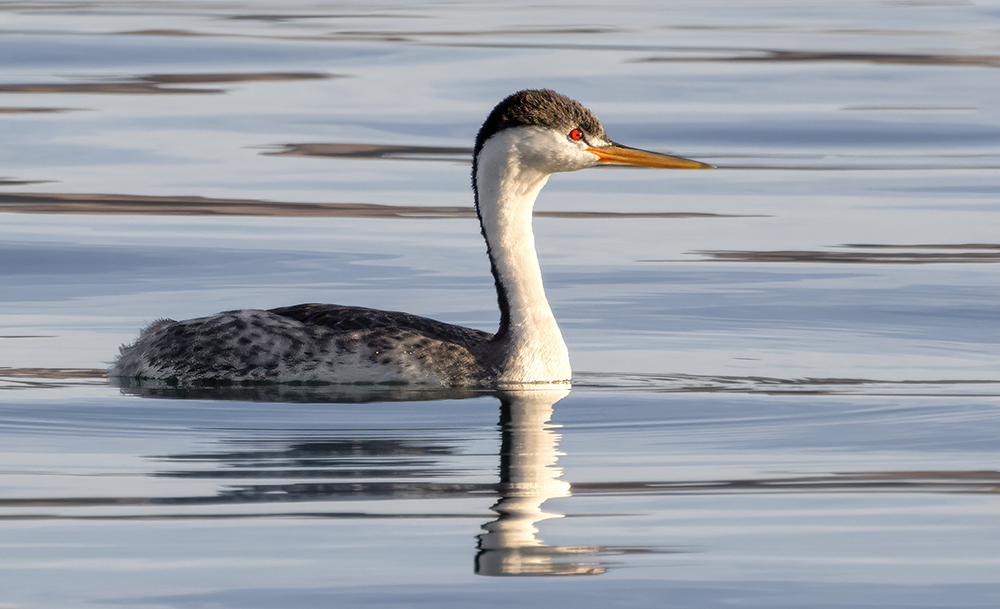
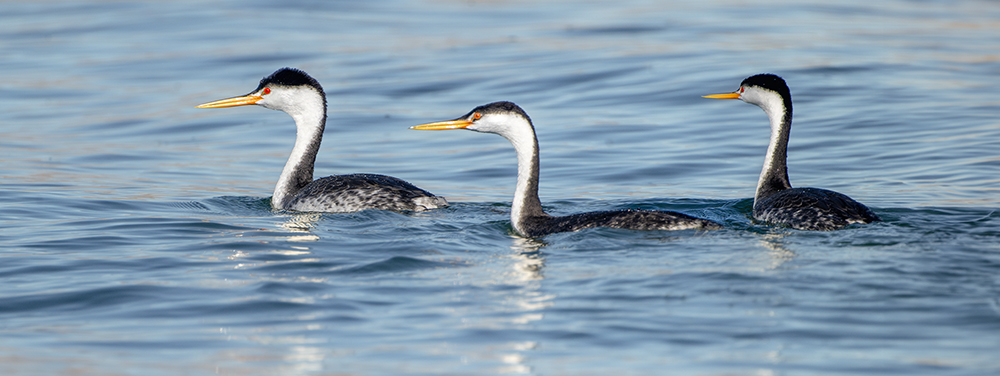
Clark’s Grebe is a slender, long-necked waterbird distinguished from its close relative the Western Grebe by a white facial stripe that extends above the eye and a bright yellow bill. In Arizona, this species maintains local populations year-round on large freshwater lakes and reservoirs—most notably along the Lower Colorado River Valley (Lake Havasu, Topock Marsh) and at sites such as Painted Rock, San Carlos, Roosevelt, Lyman, and Mormon lakes. During winter (October–April) Clark’s Grebes often form flocks exceeding 1,500–2,000 birds, while summer counts typically range from 300 to 600. Breeding in Arizona is opportunistic and irregular: although nesting was first documented at Lake Havasu in the 1960s, confirmed nesting has occurred only in 2005, 2015, and 2017—years when rising water levels created emergent vegetation suitable for nests. Clark’s Grebes forage by diving for small fish, crustaceans, aquatic insects, and worms.