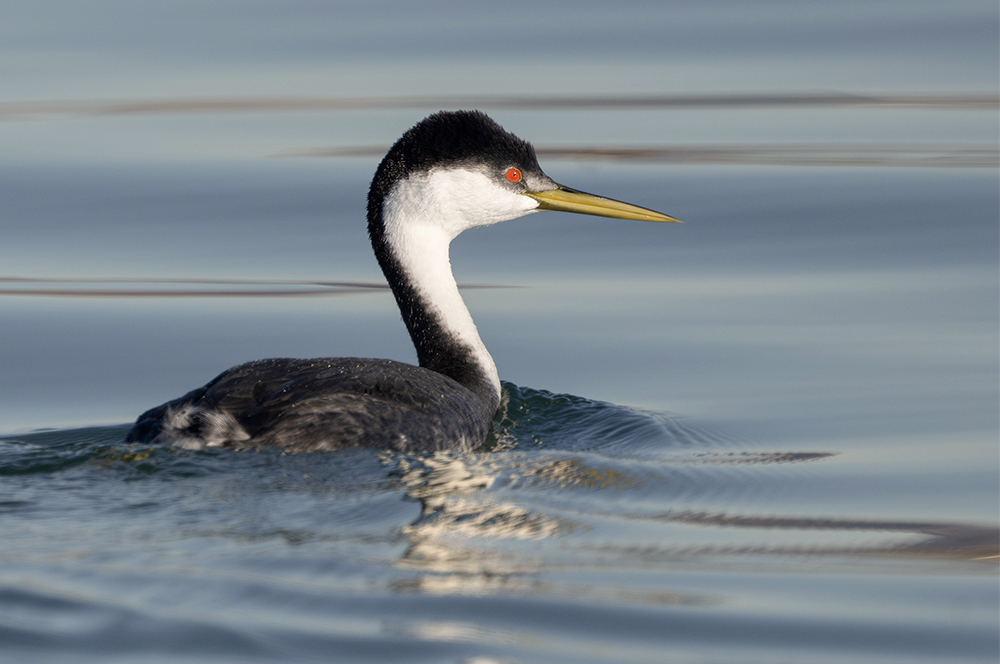
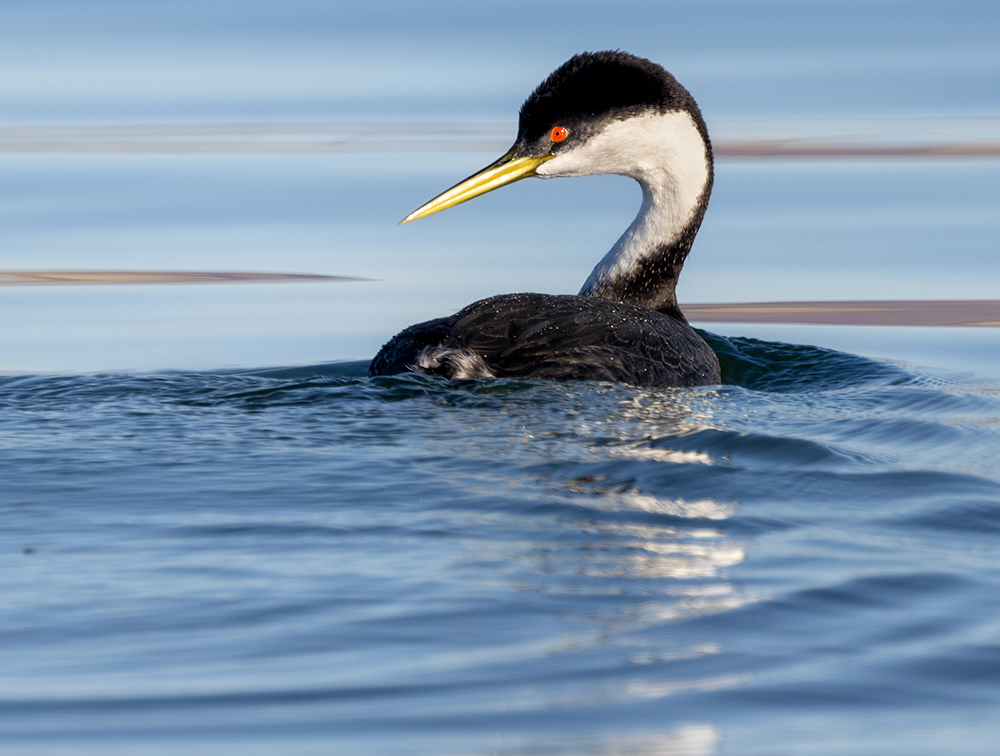
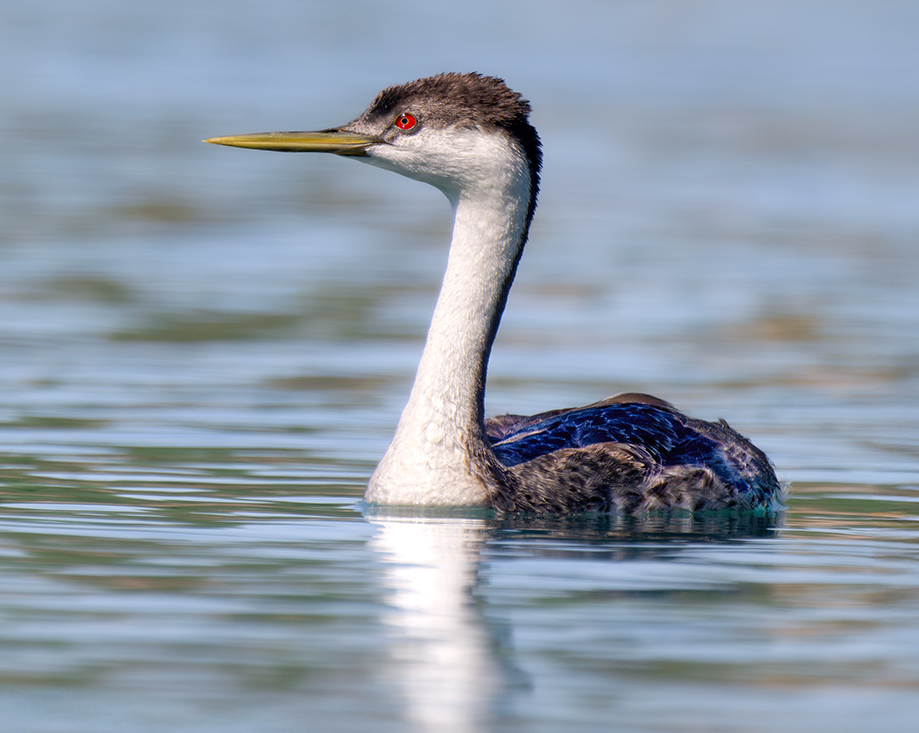
Western Grebe is the largest North American grebe, measuring 25 inches in length with a wingspan of 24 inches and weighing 1138–1826 g. Adults display striking black-and-white plumage with a sharply demarcated black cap, white cheeks, a slender swan-like neck, yellowish-green bill, and piercing red eyes.
In Arizona, Western Grebes are regular wintering and resident birds on the state’s larger lakes and reservoirs, having expanded their range over the past six decades. Breeding was historically absent until wetland vegetation at the north end of Lake Havasu supported the first nests in 1966; by the 1980s nesting had spread to Topock Marsh, Painted Rock Reservoir in Maricopa County, and several lakes on Navajo tribal lands in Apache County. Extreme water-level fluctuations at San Carlos Lake limit suitable nesting habitat, with confirmed breeding only in select years such as 2005, 2015, and 2017.
They forage by diving for fish, crustaceans, aquatic worms, and insects in open freshwater, often in groups, and can remain submerged for long periods while hunting. During the breeding season, pairs perform an elaborate courtship display known as the “rushing ceremony,” in which both birds lift their bodies upright and race side by side across the water’s surface.