
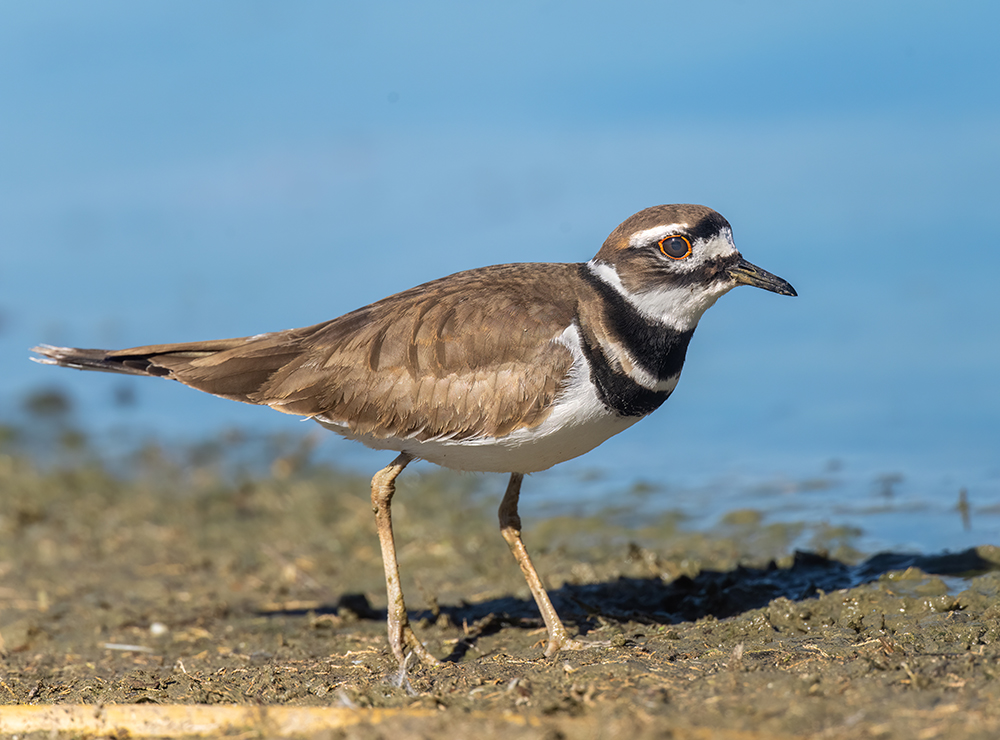
Plovers are small to medium-sized shorebirds characterized by round heads, short bills and a distinctive run-and-pause feeding style. The most familiar species is the Killdeer (Charadrius vociferus; 8–11 inches), a noisy year-round resident of mudflats, irrigated fields and urban ponds, easily identified by its two bold black breast bands and loud “kill-dee” call. Migration brings a suite of scarcer plovers: Mountain Plovers (C. montanus; ~9 inches) pass through Willcox Playa and occasional winter fields, showing a broken breast band and pale buff upperparts; Snowy Plovers (C. nivosus; 6.5–7.9 inches) stop at saline lakes such as Alamo and Tule playas, marked by a single narrow breast band and very pale plumage; and Semipalmated Plovers (C. semipalmatus; 6.3–7.1 inches) turn up at shorelines and river margins in spring and fall, with a small orange bill tipped in black. Rare vagrants—American Golden-Plover (Pluvialis dominica), Pacific Golden-Plover (P. fulva), Piping Plover (C. melodus) and Wilson’s Plover (C. wilsonia)—have been documented at refuges like Cibola and Imperial Wildlife Areas but remain annual rarities. Plovers favor open, sparsely vegetated shorelines and playas, where they probe for insects and crustaceans.
Killdeer