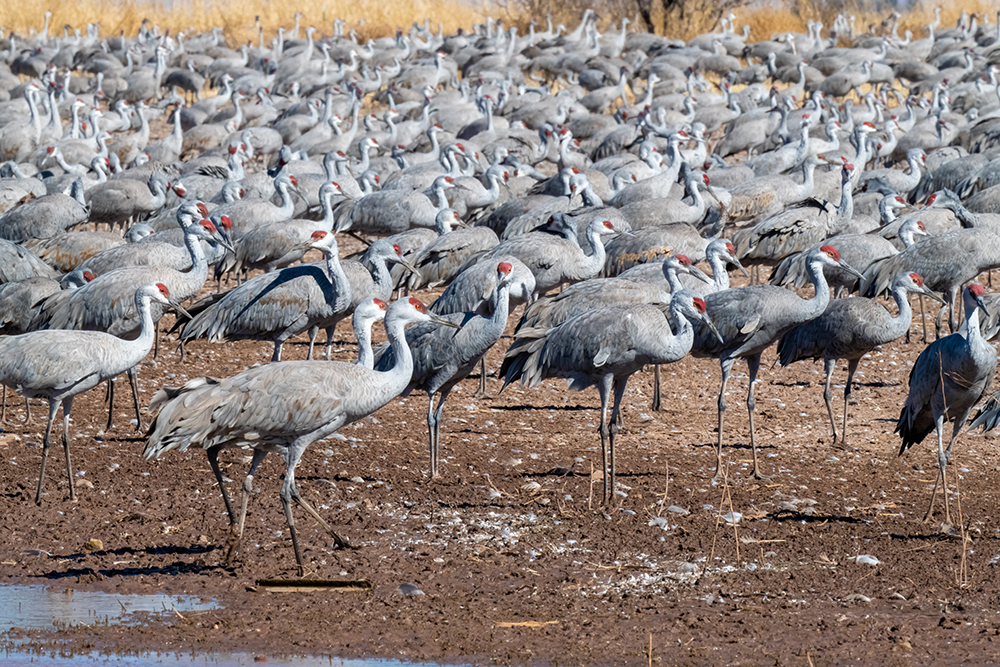
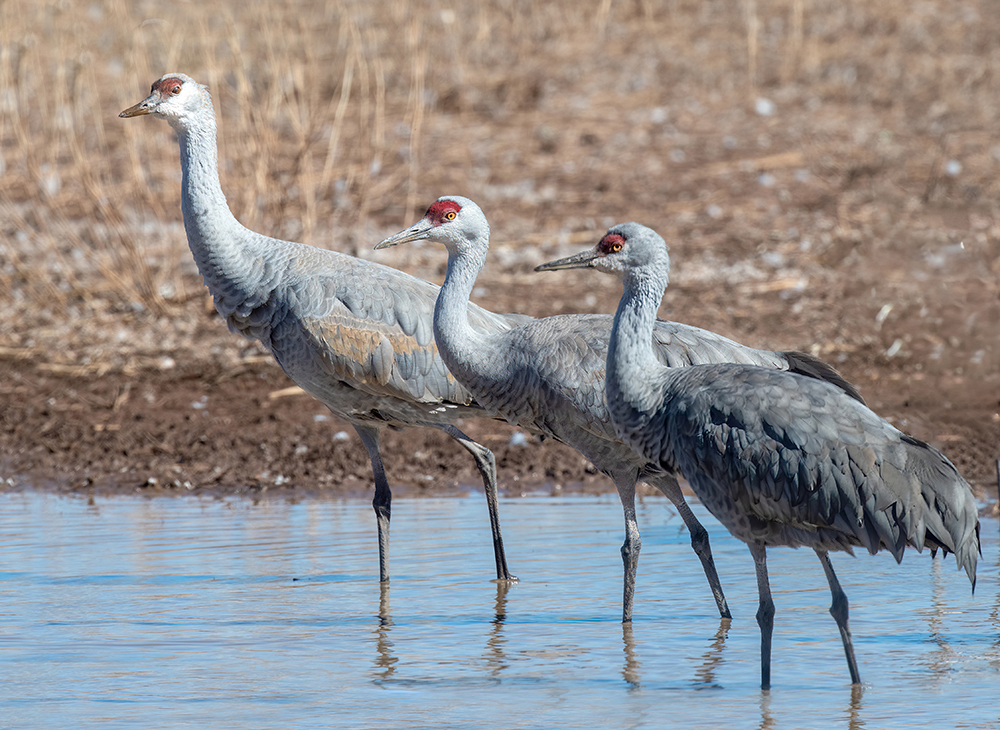
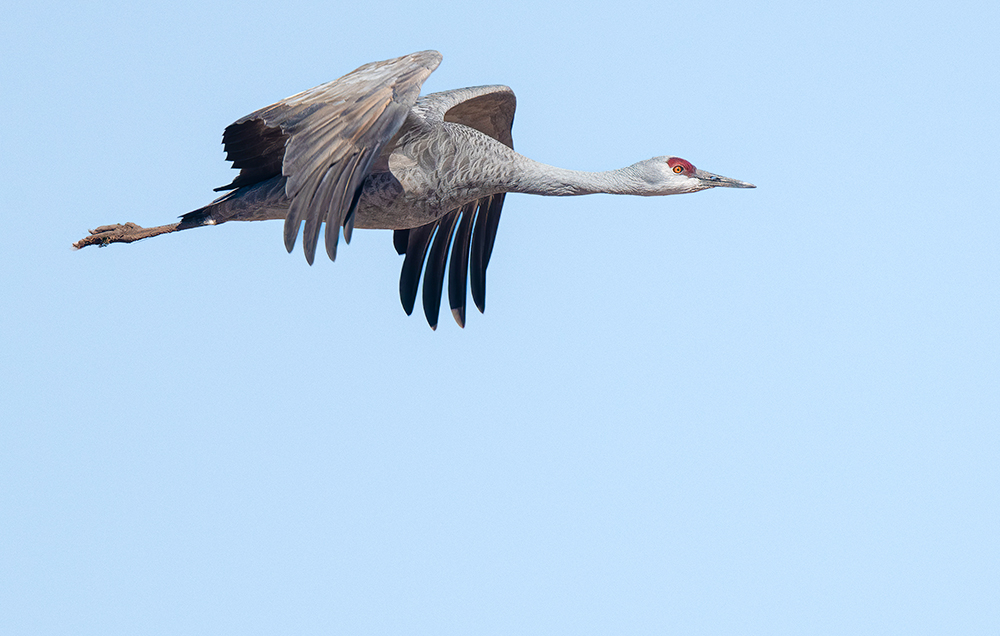
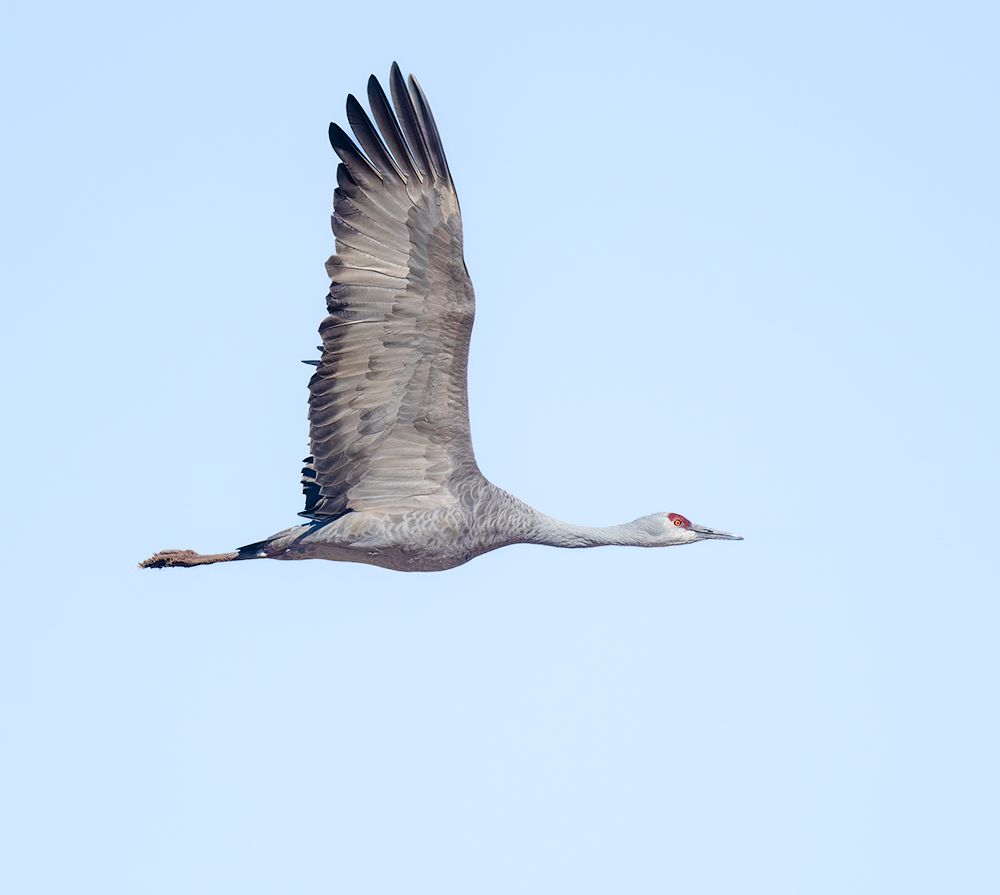
The Sandhill Craneis one of North America’s most iconic and easily recognized cranes. Standing 40–50 in tall with a wingspan of 6–7 ft, it sports mostly pale gray plumage—often warming to buff or rust tones from mud bathing—black primary wingtips visible in flight, and long, dark legs and neck. Adults are crowned with a bright red forehead patch set against an otherwise gray head, and their long, pointed bill is pale gray to yellowish. In flight, Sandhill Cranes fly with necks and legs fully extended, producing their trademark rolling “kar-r-r-o-o-o” calls that carry for miles across marshes and fields.
In Arizona, Sandhill Cranes occur primarily as migrants and winter visitors, concentrating wherever shallow wetlands and flooded agricultural fields provide safe roosts and foraging opportunities. Two of the best-known sites are Whitewater Draw Wildlife Area and Lake Cochise (near Willcox . From late October through February, tens of thousands of cranes arrive to roost each evening in the flooded draw and on the reservoir’s shallow flats, then fan out at dawn to feed in nearby grain fields. Visitors to Whitewater Draw and Lake Cochise during these months can witness spectacular dawn or dusk flights as cranes swirl into or away from their communal roosts, a vivid testament to Arizona’s vital role in the migration network of this majestic species.