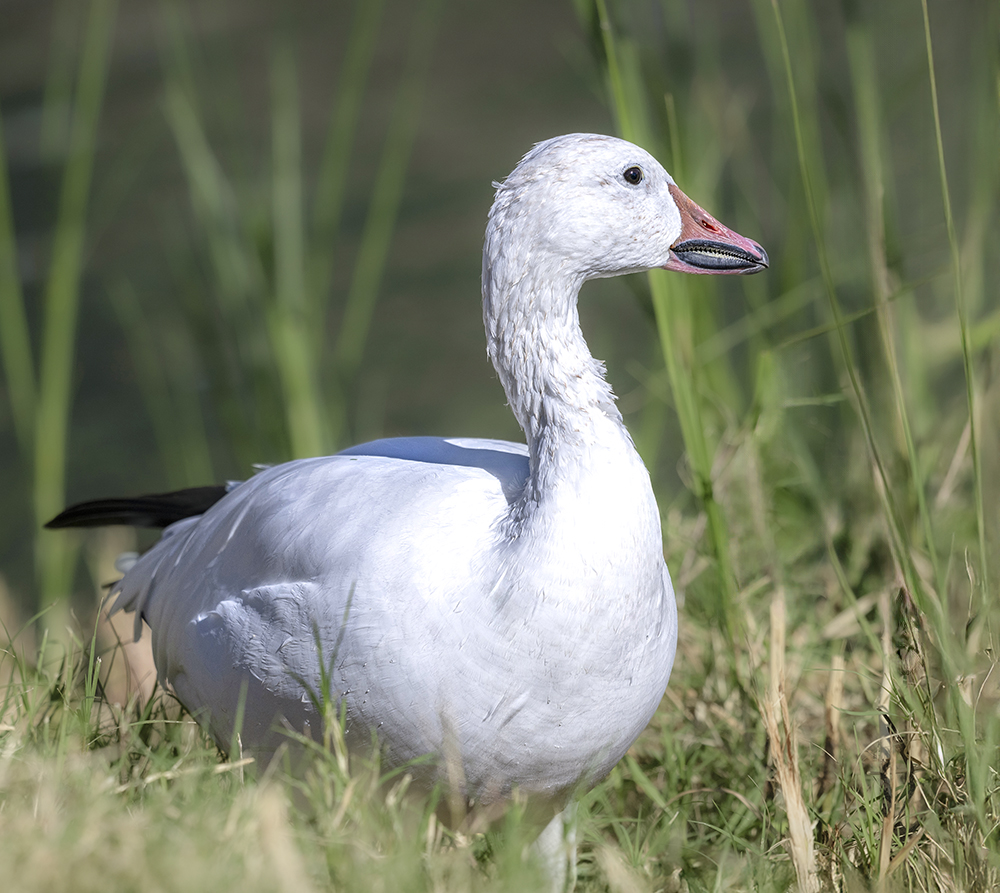
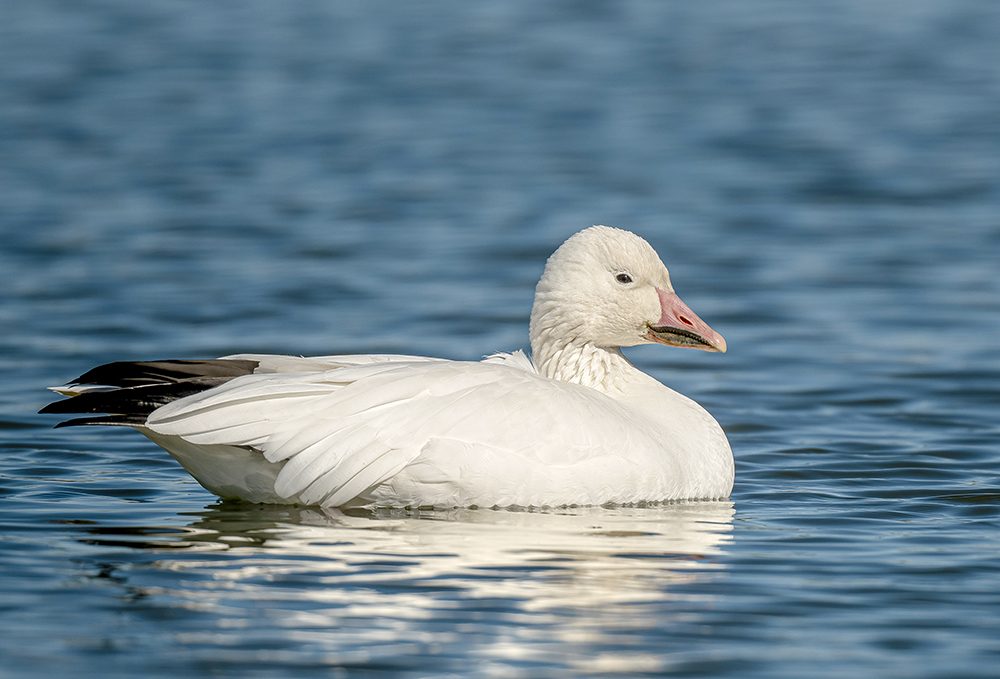
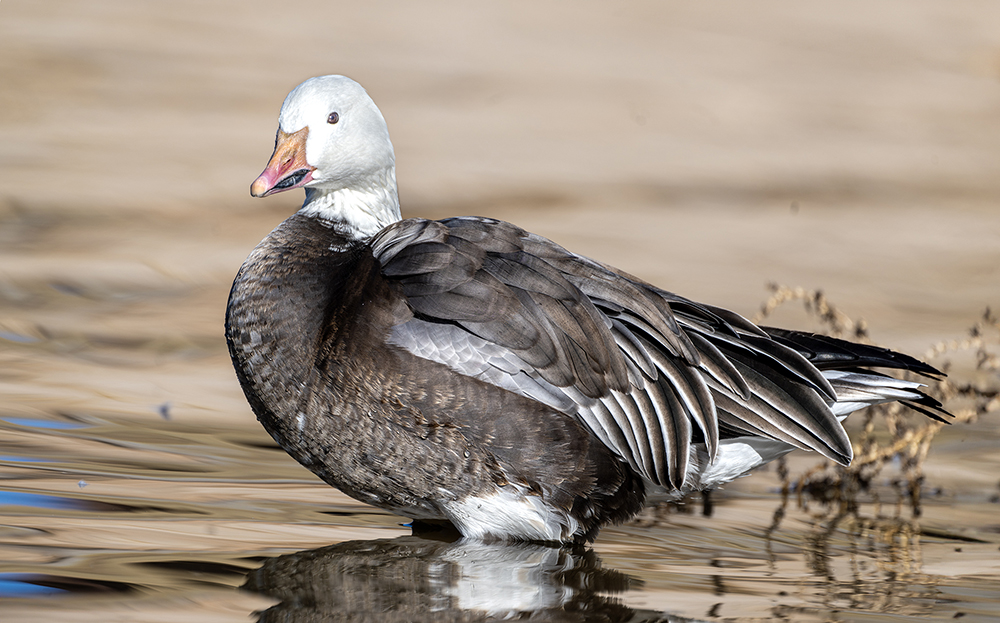
Snow Geese are among the most conspicuous winter waterfowl in Arizona, arriving in large flocks that blanket fields and marshes in brilliant white. Adults measure 24–33 inches in length with a wingspan of 53–65 inches and weigh between 2.7 and 4.6 kg (6–10 lb). Their plumage is typically all white, contrasted by black primary feathers visible in flight; a less common “blue” (or dark‐morph) phase displays slate-blue body feathers with a white head cap (3rd photo below). Both morphs share a stubby, pink bill adorned with a small “grinning patch” along the edge, pink legs, and orange-red feet. Vocalizations are loud, nasal honks—often heard as the birds wheel overhead in V-shaped or linear formations.
In Arizona, Snow Geese are strictly seasonal visitors, arriving as early as October and remaining through March, with peak numbers from December to February. They concentrate in agricultural fields—especially harvested grain and alfalfa—and at freshwater marshes and managed wetlands. Key wintering sites include Cibola National Wildlife Refuge, the Lower Colorado River Valley near Yuma, and the Willcox Playa area. Here they feed by grubbing vegetation and gleaning waste grain, often mixing with Ross’s Geese and other waterfowl. Migrating primarily along the Pacific and Central Flyways, Arizona’s wintering Snow Geese represent the southernmost edge of their great annual journey between Arctic breeding grounds and milder southern wetlands.