
The Greater Yellowlegs (Tringa melanoleuca) is one of Arizona’s larger sandpipers, easily distinguished by its long, up-sloping bill and bright yellow legs. Adults measure approximately 11.8–15.8 inches in overall length, with a wingspan of 25–29 inches and a bill length of about 2.8–3.3 inches. In breeding plumage they show bold white-and-gray barring on the flanks; in non-breeding (winter) plumage the upperparts are more uniformly gray.
In Arizona, Greater Yellowlegs are regular spring and fall migrants, most often seen probing the shallows of marshes, lake margins and flooded agricultural fields. Peak passage occurs April–May and again August–October. A few linger through winter along the lower Colorado River and in southern wetland refuges such as the Willcox Playa and Whitewater Draw. They forage by wading in shallow water—stirring mud with their long bills to expose aquatic invertebrates, small fish and tadpoles—and give a distinctive series of sharp, rolling “tew-tew-tew” calls while on the wing or when flushed.
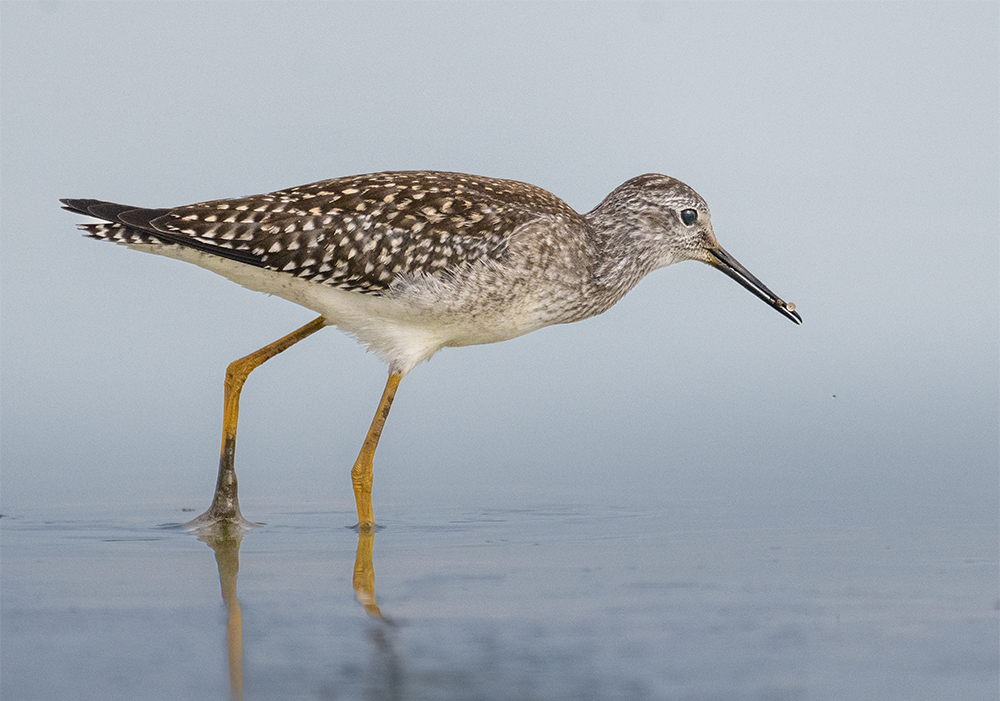
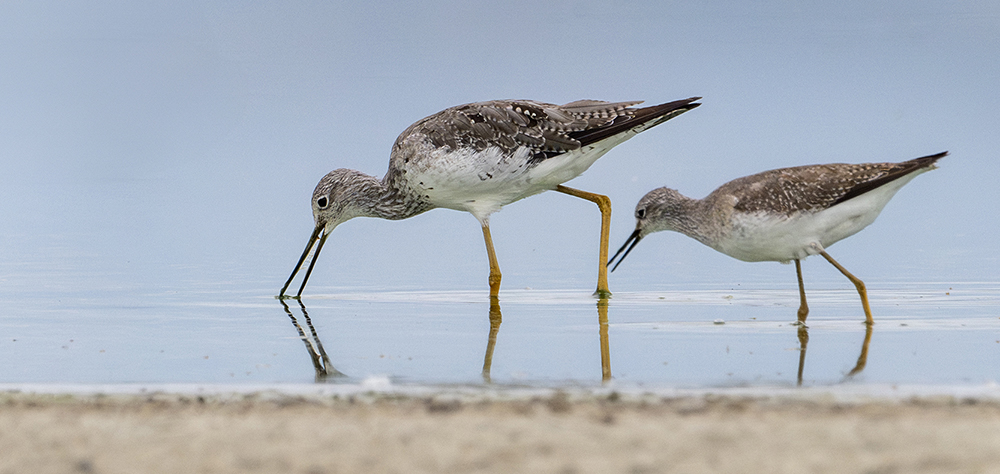
Greater Yellowlegs and Lesser Yellowlegs