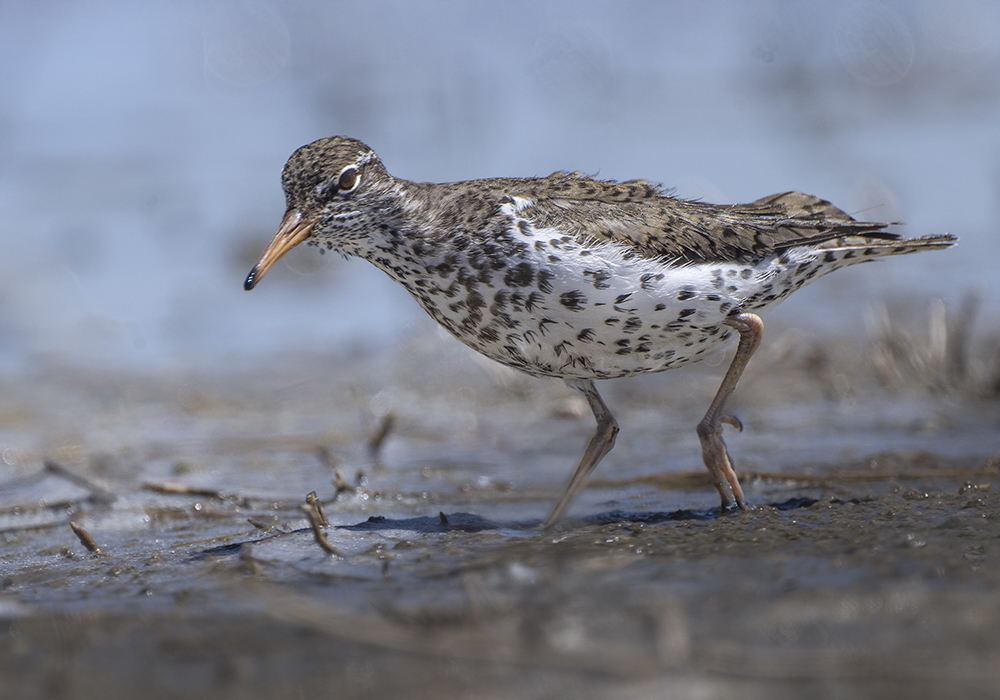
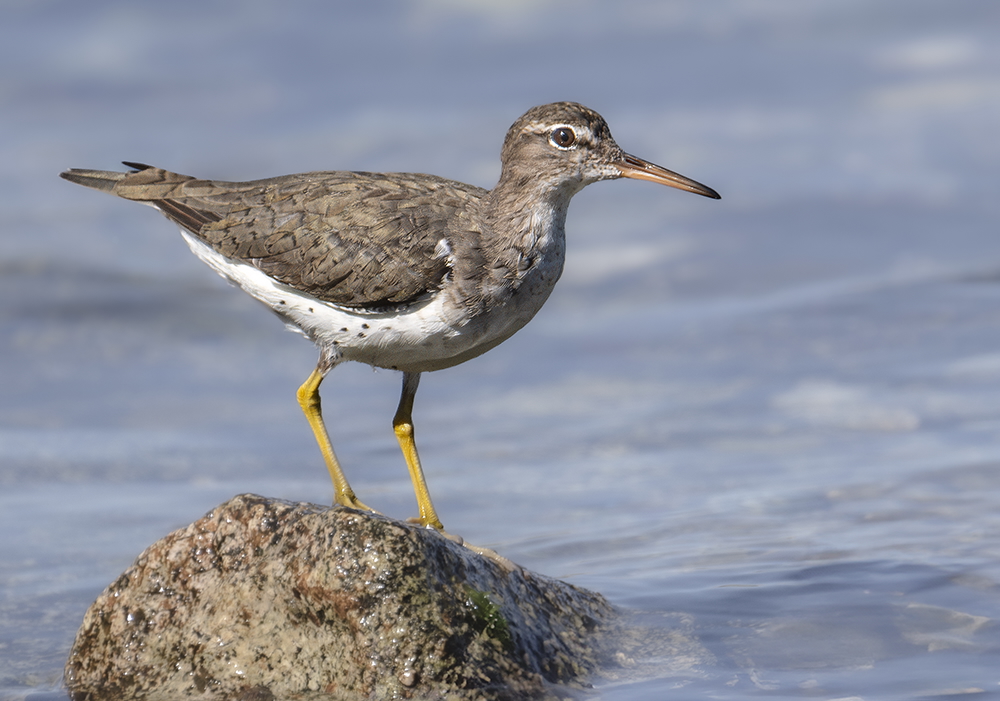
The Spotted Sandpiper is a slender shorebird (7.5–9.5 inches long; wingspan 14.5–15.8 inches) that, in Arizona, occurs as a spring and fall migrant and—at higher elevations—an uncommon summer breeder. You’ll most often find it bobbing its tail along the rocky margins of mountain streams in the Mogollon Rim and White Mountains from late April through July. During migration (late March–mid May; late July–early October), it spreads out across lowland rivers, marshes, irrigation canals and wetland edges statewide. Adults in breeding plumage show olive-brown upperparts, bright white underparts heavily spotted with dark teardrops, a clean white supercilium, and a straight bill about 0.8–1.1 inches long; non-breeding birds lack most spots. Spotted Sandpipers forage by sight—picking aquatic insects, crustaceans and small mollusks from mudflats and shallow water—and nest on the ground in a simple scrape lined with vegetation. Their constant teetering motion and spotted belly are unmistakable markers wherever they occur in Arizona.