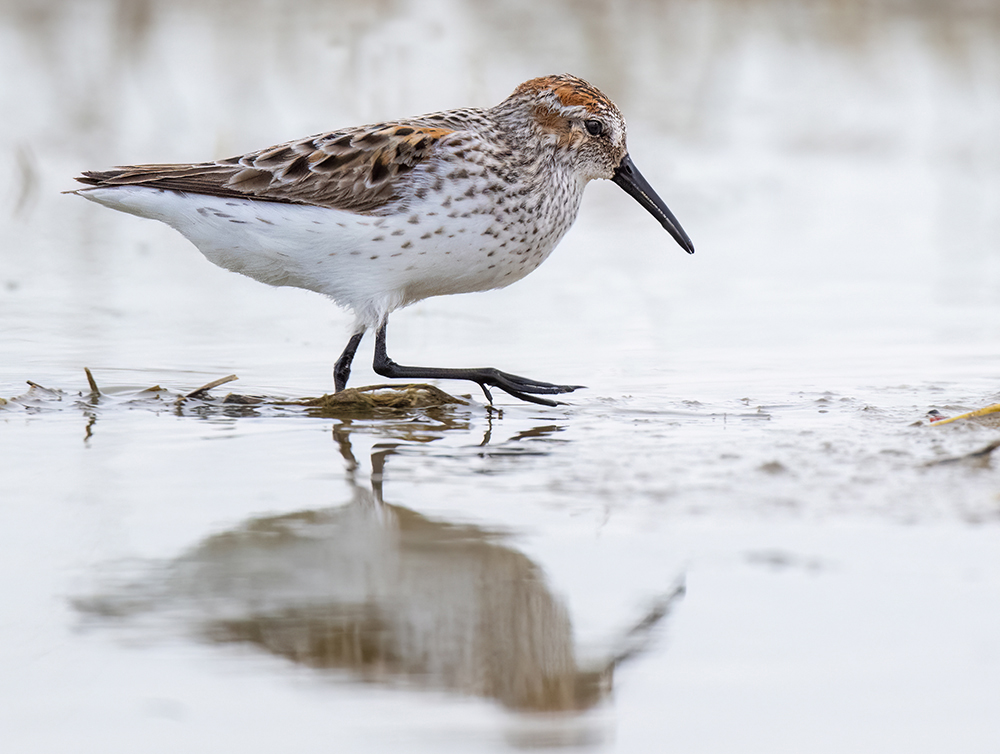
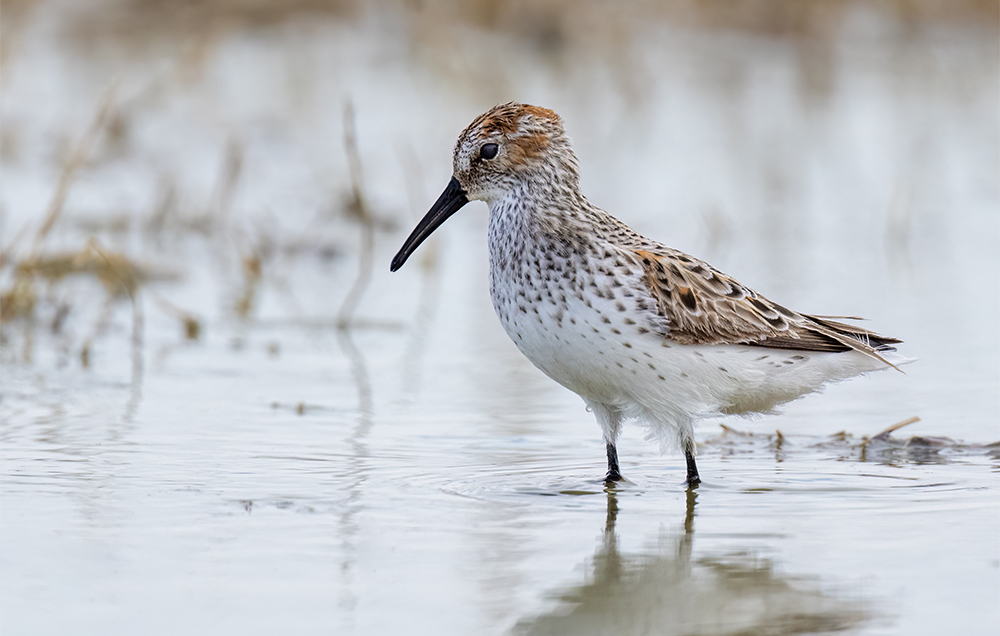
Western Sandpiper is one of Arizona’s most abundant migrating “peeps.” At just 6.5 inches long, it’s distinguished by its short, straight black bill, dark legs, and relatively long wings. In breeding (summer) plumage adults show warm rufous tones across the head and upperparts, but by the time they reach Arizona in spring and fall migrations they’re usually in pale gray-and-white non-breeding dress, making field separation from closely related peeps a matter of bill length, wing projection, and subtle plumage nuances.
These sandpipers pass through Arizona primarily during two migration waves—spring (late March through early May) and fall (mid-July through late September). They concentrate on mudflats, saline playas, and shallow edges of lakes and stock tanks. Prime viewing sites include Willcox Playa in southeastern Arizona, Cienega Creek near Vail, and the wetlands around Yuma and San Simon Valley. Flocks often mix with other Calidris species—especially Semipalmated and Least Sandpipers—so careful attention to size and structure is key. Western Sandpiper numbers can peak at several thousand on a single playa, underscoring Arizona’s importance as a migration stopover in the interior flyway.