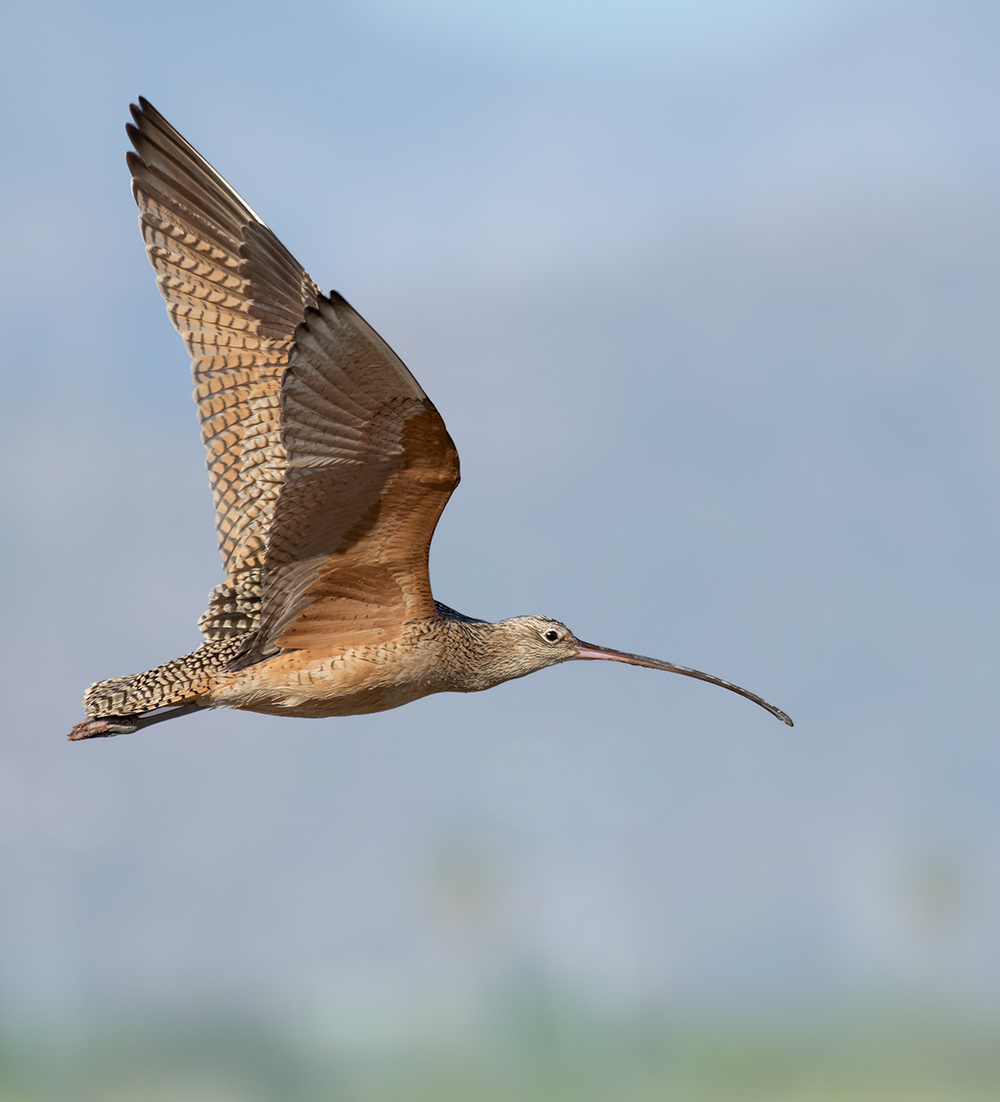
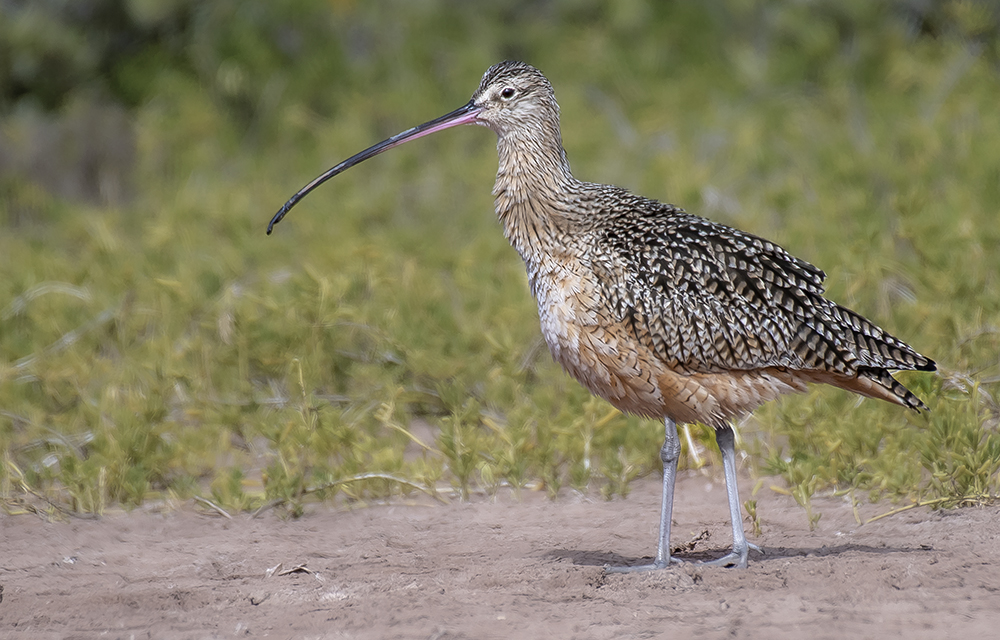
The Long-billed Curlew is the largest sandpiper of regular occurrence in North America, reaching a body length of 19.7–25.6 inches, a wingspan of 24.4–35.0 inches, and weighing 17.3–33.5 ounces. Its hallmark is a markedly down-curved bill, used to probe mud and soft substrates for crabs, insects, worms, and other invertebrates.
In Arizona, long-billed curlews are primarily winter visitors (October–March), forming small flocks in grassy meadows, flooded fields, mud flats, and pond edges, where they use their long bills to forage for crustaceans, mollusks, and insects. Breeding occurs farther north and west, and summer records in Arizona are rare.