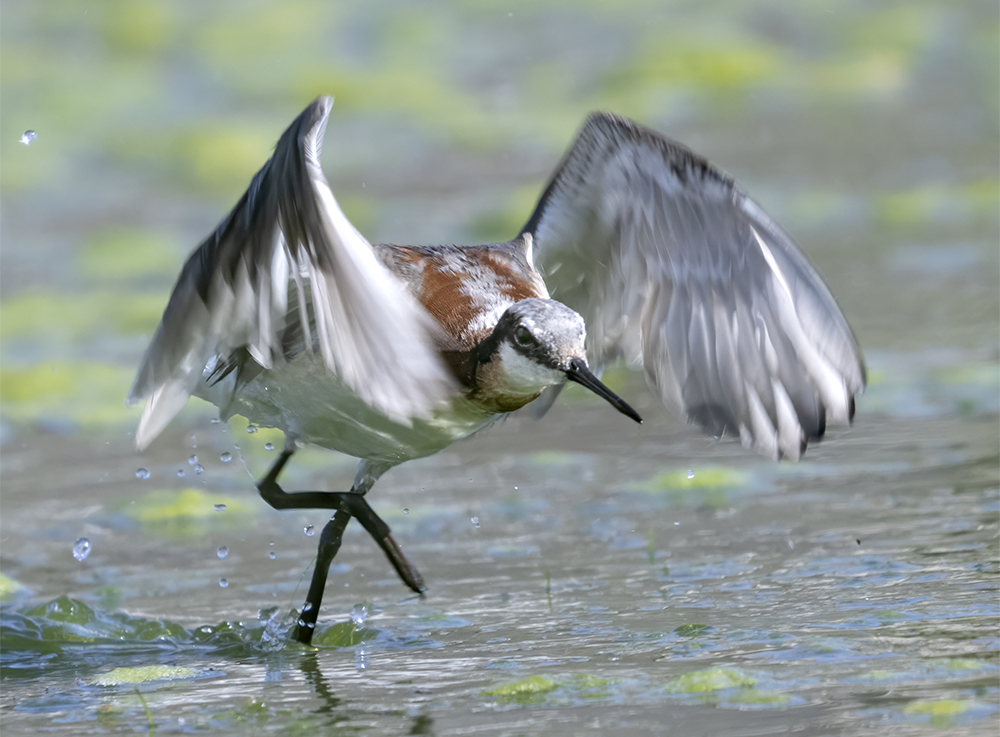
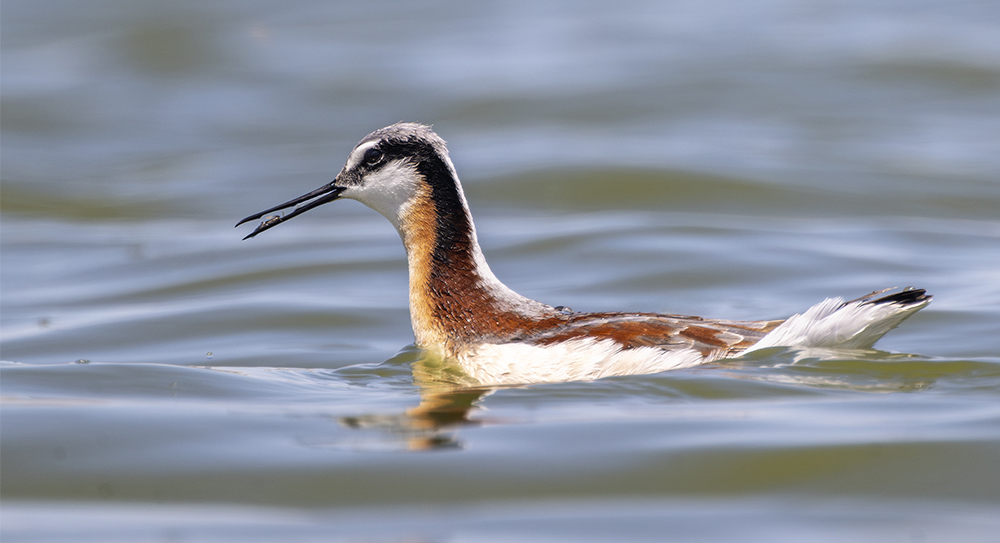
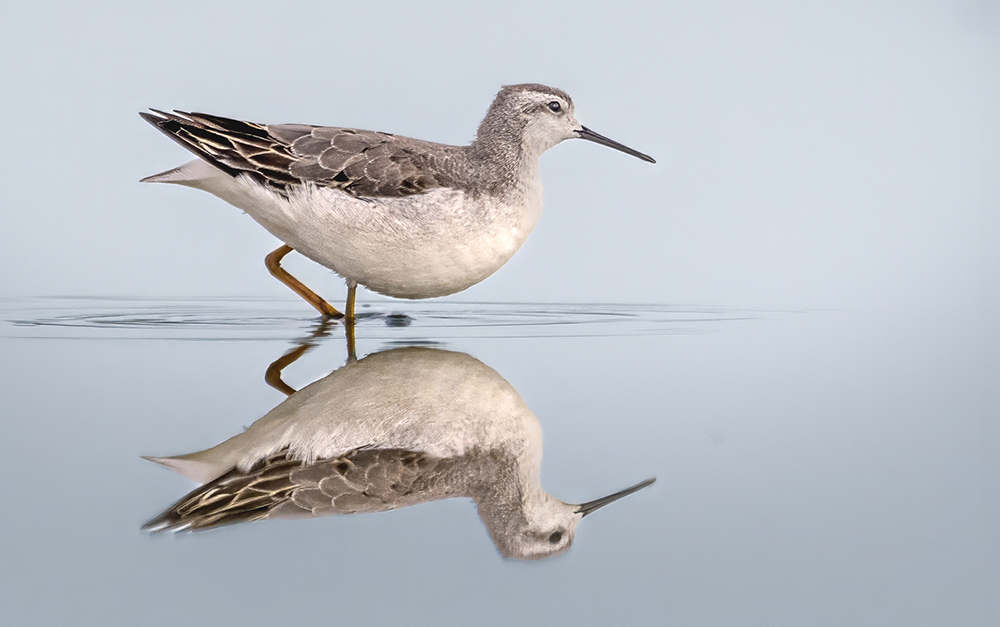
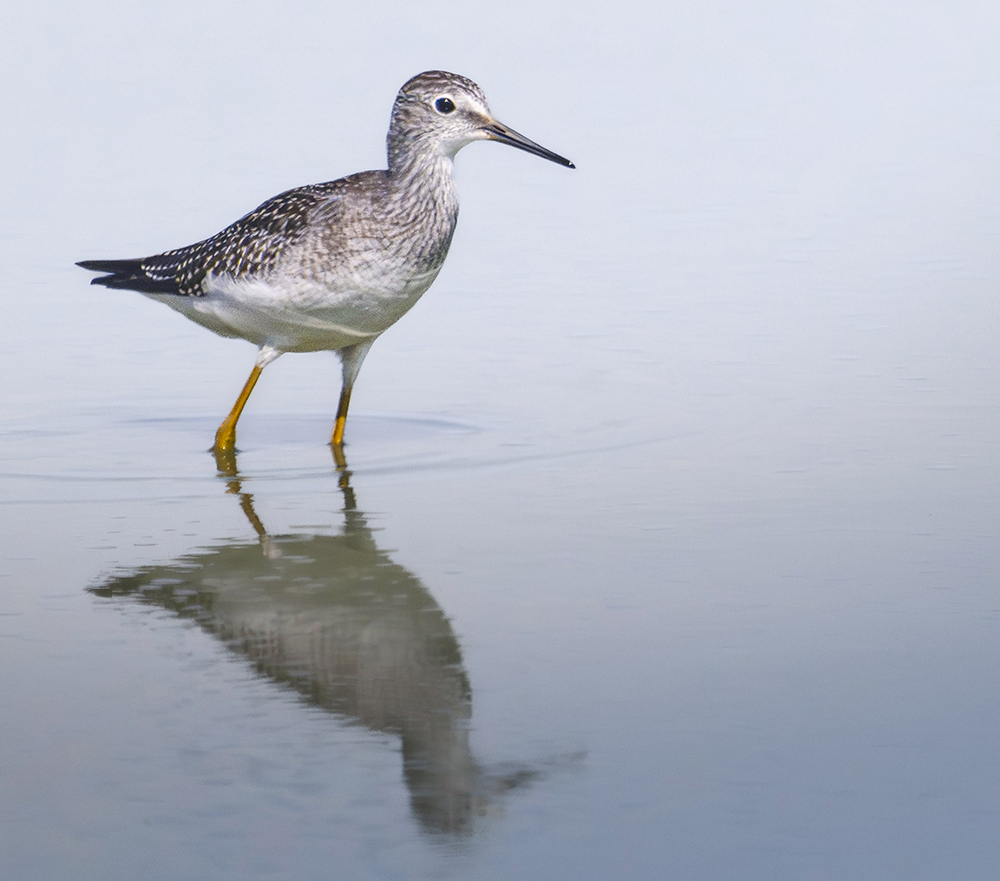
Wilson’s Phalarope is the largest of the three phalarope species, a slender shorebird measuring 8.7–9.4 inches in length with a wingspan of about 15.3–16.9 inches and weighing 1.3–3.9 oz. Breeding adults show reversed sex roles: females are larger and more brightly colored—rich cinnamon and gray above with bold black neck stripes—while males are duller versions of the same pattern. In Arizona, Wilson’s Phalarope is strictly a passage migrant, most often encountered in spring (late March–May) and fall (July–September). Birds congregate on shallow, saline mudflats and wastewater ponds—sites such as Patagonia Lake, Yuma East Wetlands, Cibola National Wildlife Refuge, and various sewage-treatment ponds—where they feed by swimming in tight circles that create whirlpools to stir up invertebrates. There are no confirmed breeding records in Arizona.